
Saving starts with knowing where it is going
Charging back what a guest uses, switching off what is unused, adjusting what works too hard. All three start with a measurement.
Measuring only pays off when there's a button involved
Insight alone saves nothing. The difference lies in what you can do afterwards, whether it’s a single action or a round over the area.
Seeing without being able to intervene
A graph showing that site 42 is consuming, changes nothing as long as you can't intervene.
Costs that you continue to bear
What you can't allocate, you can't recharge. So you pay for it yourself, every season again.
Measures based on gut feeling
Isolate, replace, adjust: without figures from before and after, you only know in hindsight if it made a difference.
From figure to action
Measuring and insight are the first two steps. They only yield results when followed by action.
There are three: charging back what a guest consumes, turning off what is unused, and adjusting what works harder than necessary. All three start with a measurement you can point to.

Four ways it pays for itself
Usually not one big saving, but four small ones that last throughout the season.
Recharging what a guest uses
Consumption that is measured can be charged. This is usually the largest part at camping sites.
Shutting down what is inactive
An unoccupied site or a closed building costs nothing more once it's removed.
Adjusting what is working too hard
One degree lower, a pump on the right setting, ventilation that adapts to the crowd.
Investing based on facts
You replace what costs the most, not what is the oldest. And you see afterwards if it was correct.
Because the toilet building is monitored 24/7, our guests never have a cold shower.
RCN Holiday Park de Jagerstee
Charging back what a guest consumes
As long as electricity is included in the overnight price, the frugal guest contributes to their neighbor's air conditioning. If you charge per site, that imbalance disappears.
And consumption decreases because the guest is aware. At metered camping spots, we see an average of twenty percent less energy consumption — not because something is turned off, but because someone sees what they are using.
For water and gas, it works the same: per building, per accommodation, or per tap point, and summed up to one amount per site.

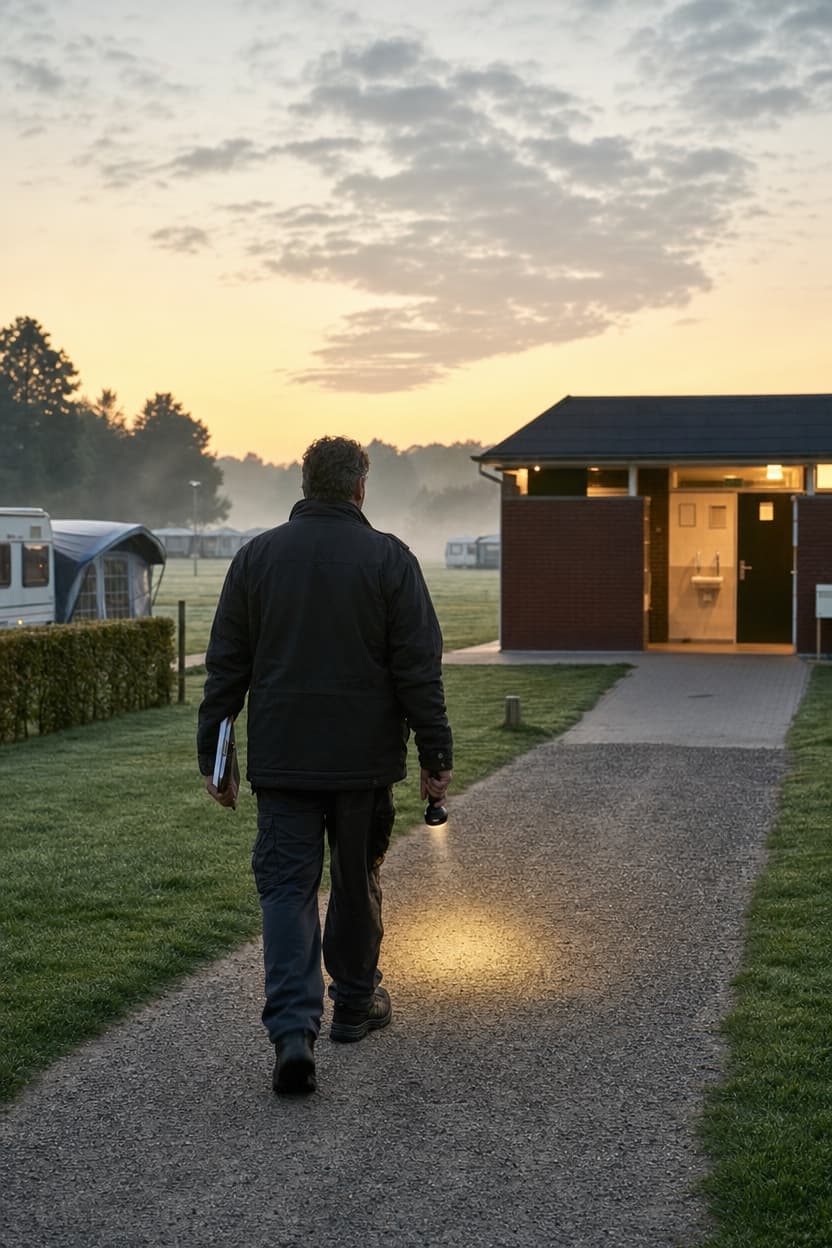
The round you no longer have to walk
A recreation business is a large area with many loose controls: the freezer in the kitchen, the boiler in the sanitary building, the temperature in the vacant chalet.
These controls do not need to be done on foot. A limit per installation and an alert once something exceeds it saves the daily round and also captures the failures that occur between two rounds.
What is unused can be switched off remotely, and what is running too hard can be adjusted remotely. That saves hours you would rather spend on your guests.
Do you want to know where you are leaking money?
In an introductory meeting we discuss your site and what passing on costs and switching off can yield.