

Cheaper and Lighter
In recent years, solar panels have developed significantly, both in terms of efficiency and weight. Whereas it was previously not possible to install solar panels on certain buildings, such as older receptions or hospitality venues, the options are now much broader.
New technologies such as the eArc modulesreplace traditional glass with a patented composite material, making the panels up to 70% lighter and 95% thinner than conventional glass solar panels. This allows them to be easily installed on structures that cannot bear the weight of traditional panels, such as commercial and industrial roofs that would otherwise be unsuitable for solar energy.
Additionally, the price of solar panels has decreased in recent years. Since 2020, average prices have even been at their lowest ever. This makes the purchase increasingly affordable and the payback period, depending on the chosen installation and usage, can even be achieved within five years. This makes solar panels an attractive option for recreation businesses as well.
Solar Panel Yield vs. Occupancy Rate
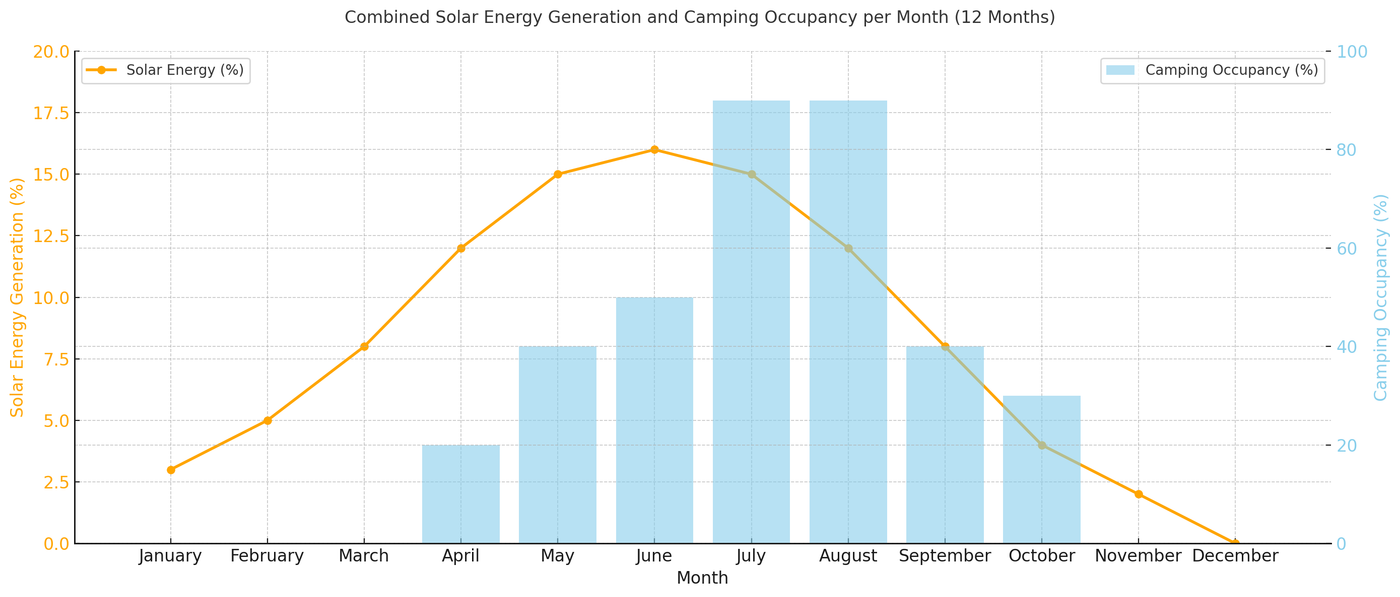
Solar panels generate the most power during the period with the most sunlight, which typically coincides with the peak season of campsites and holiday parks. This coincidence is a significant advantage: the demand for electricity during these months (for example, for air conditioning, lighting, and electric cooking equipment) is at its highest, and the yield from solar panels is also at its peak.
This means you have “free” electricity at the moment you need it most. As a result, the energy you generate can largely be consumed directly instead of being fed back to the grid at a reduced rate. Therefore, it is important to calculate the payback period of solar panels differently than for households. In recreation businesses, with a seasonal demand pattern, the investment in solar panels can even be recouped more quickly, as self-consumption is optimal in the months with the highest energy yield.
Smart Energy Management: Measuring is Knowing
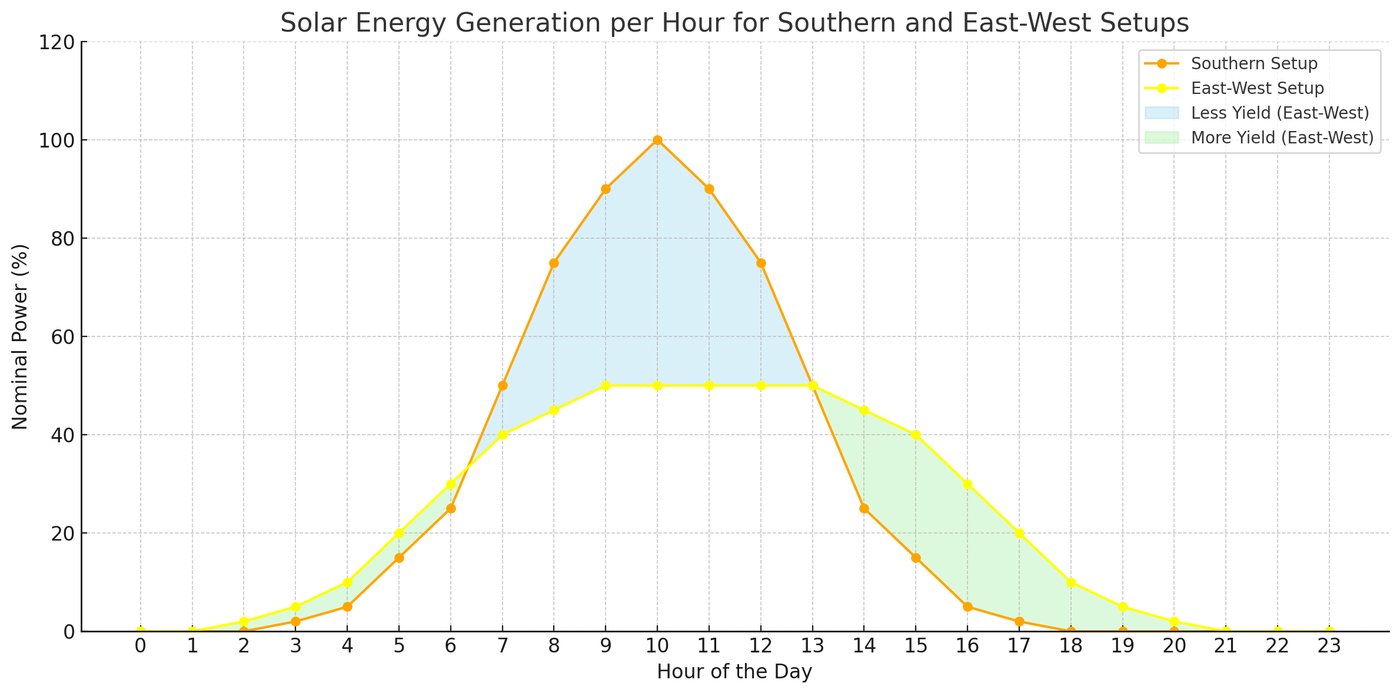
If you know that energy demand strongly correlates with occupancy rates, you can take it a step further. By accurately monitoring energy needs and linking them to energy generation, you can ensure that all generated energy is used as efficiently as possible. This can be done with smart meters and energy management systems that provide insights into energy demand and supply on an hourly basis.
A good example of this is the use of a east-west configurationfor solar panels instead of the traditional southern configuration. With an east-west orientation, more energy is generated in the morning and late afternoon/evening, which aligns perfectly with the peak times of electricity demand at an average campsite or holiday park. This prevents overproduction during the afternoon hours that may not be consumed immediately.
Optimization of Consumption
With detailed energy insights, you can also consider scheduling certain energy-intensive activities, such as starting heat pumps or heating swimming pools, at times when the sun is shining the strongest. This way, you can align demand with the availability of solar energy and save even more on energy costs.
Conclusion: Solar Panels as a Strategic Choice
Although the return of solar panels may not be immediately apparent due to changes in feed-in tariffs, recreation businesses can still gain significant advantages by using solar panels smartly. The combination of a high occupancy rate during sunny months and the ability to consume energy directly makes it possible for the payback period to be favorable in many cases.
Also consider investing in a smart energy management system that provides insight into both your energy consumption and the yield from solar panels. This way, you maximize the benefits and ensure that every generated kWh is used optimally.
In other words: by managing your energy smartly and utilizing solar energy at the right moment, you as a recreation entrepreneur can benefit from sustainable and cost-saving energy — precisely when you need it most.